Table Of Content
- Cues: Adapting Art Deco Interiors
- Intricate and Decorative Detailing With Dramatic Lighting
- French Chateau Style Interiors: History, Key Features, and Cues
- How to Add Art Deco Elements to Your Home
- Art Deco Interior Design: Everything You Need to Know About This Opulent Style
- History and Origin of Art Deco Interior Design
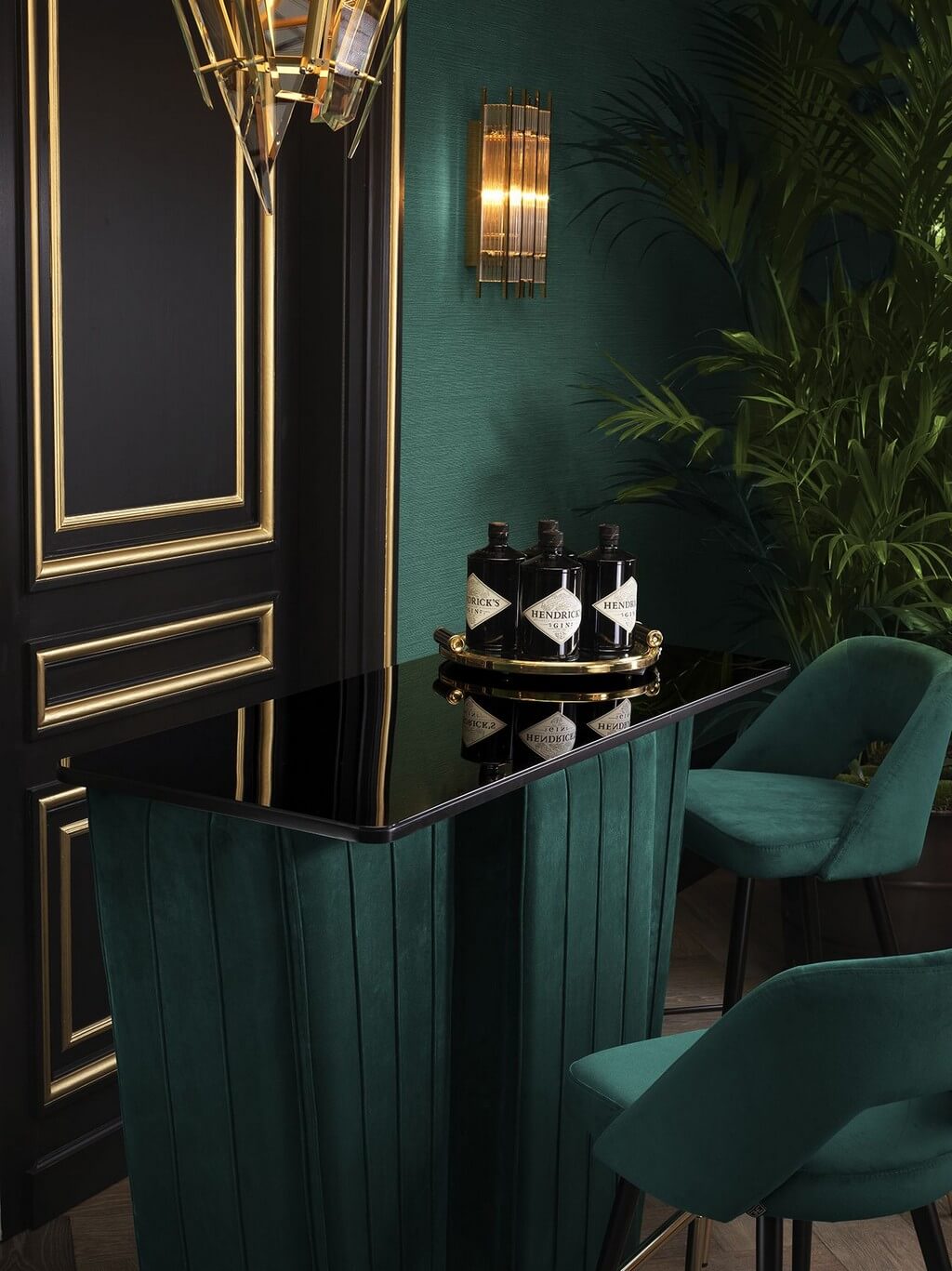
Art Deco is a playground where novel materials find their place alongside traditional opulence, crafting an atmosphere of unrivalled sophistication and timelessness. Exotic woods, lustrous marble, gleaming chrome, translucent glass, and reflective mirrored surfaces serve as the building blocks for creating design concepts that exude refinement and grandeur. The Art Deco style first appeared in Paris just before World War I and truly flourished in America in the 1920s and 30s. When we talk about its origins, we can’t ignore that it emerged from a movement advocating recognition for artisans as ‘decorative artists’, giving them the same rights as painters and sculptors. The Society of Decorative Artists (SAD) catalysed the popularity of this modern decorative work, which then became the fountainhead of Art Deco. If you feel that what you have done now feels a bit muted, you must be right!
Cues: Adapting Art Deco Interiors
Since this aesthetic celebrates the refinement in architecture, patterns that feature long curves, sharp lines, and geometric shapes like circles work best. Art deco style drew heavily from the pivotal concepts of a number of previous design styles. With clear influences from cubism, modernism, constructivism and futurism, art deco became a paragon of structure, symmetry and cleanliness in a wonderfully decadent world. Art deco was also a testament to multiculturalism, taking inspiration from African tribal designs, sleek Parisian industrialism, Greco-Roman sculpture and luxury, and the geometrical shapes of Ancient Egypt. The exact origins of art deco architecture are hard to trace, but the term is known to originate from France. Naturally, most people think of interior design when it comes to the design style, but art deco has an extensive scope.
Intricate and Decorative Detailing With Dramatic Lighting

Apart from the usual shark and zebra skins, there was a lot of affinity to textures like velvet and leather. You can alternatively choose solid colors or textiles with an essence of geometry in them. If you can upholster furniture with solid bold colors, you can successfully recreate art deco in your home. If you look closely, you can see that art deco houses resemble the homes and apartments of the rich and the famous in Hollywood from the early 20s.
French Chateau Style Interiors: History, Key Features, and Cues
Art Deco, short for Arts Décoratifs, is characterized by rich colors, bold geometry, and decadent detail work. Having reached the height of its popularity in the 1920s, ’30s, and ’40s, the style still brings in glamour, luxury, and order with symmetrical designs in exuberant shapes. If you’re ready to add some Deco details to your space, take a peek at these homes from Rio de Janeiro to Paris that feature Art Deco furniture, wall coverings, and fixtures in all their glory.
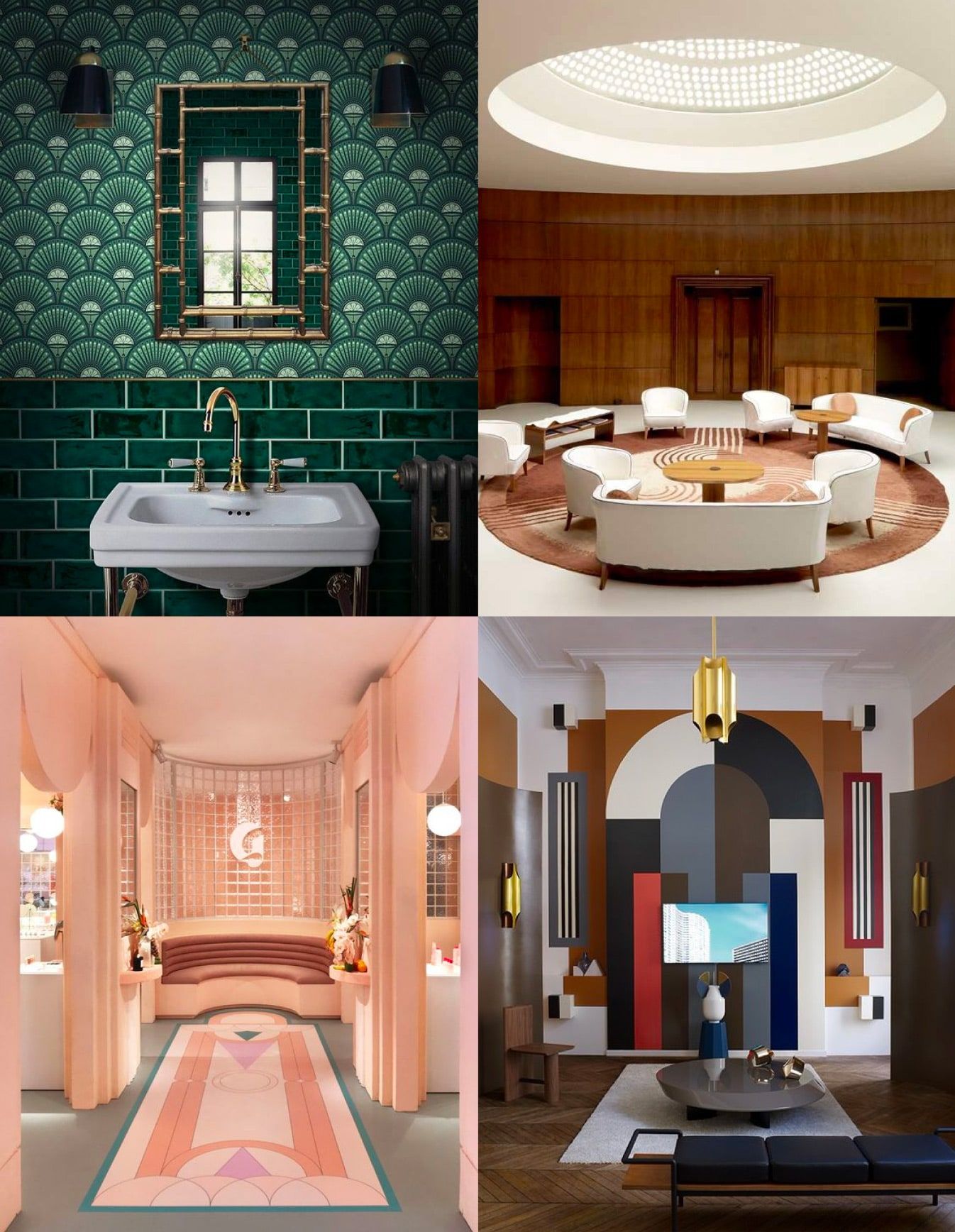
You may already be familiar with, or even own, a few of these Californian-influenced designs. See which ones are having a moment below – at least for me – and get inspiration for how to decorate with them in your own space. From embracing a calm cream and blue color palette to the use of weathered, natural materials, a nautically nuanced look instantly injects personality into such a functional space. As a consequence, both the architectural style and the art of the building exuded Art Deco.
Art Periods – A Detailed Look at the Art History Timeline
To help inspire your next decorating endeavour, here is a list of the most iconic characteristics, ideas and designs in the art deco movement. While you take inspiration from its history, complementing it with individual expression of the space keeps it in vogue even today. You can also give way to more vertical space like the 20th-century buildings by using tall drapes, furniture, and vertically painted patterns. Don’t forget to pay attention to detail and add motifs and geometric patterns through wallpapers, textiles, etc. Opt for a striking gold geometric rug or a luxuriously draped curtain, or perhaps introduce a captivating chandelier that casts an enchanting glow.
The streamlined shapes can be further adorned with gold or chrome inlays. The shapes are further accentuated with gold and chrome borders for dramatic effect. Hence, the motto of Art deco came to be known as “Master of The Sky.” The crux point of art deco was to use the past to pave the road to the future in terms of aesthetics, function, and general culture.
History and Origin of Art Deco Interior Design
Since it could be challenging to visualize, you can always take the help of Foyr Neo’s powerful rendering software. You can add elements to your existing space and see how the room would look even before being built, what’s more! Art Deco, also known as style moderne, was the major design style of the 1920s and 1930s. It's characterized by simple shapes, plenty of glamour and geometric decorations, and the use of metallics and jewel tones like jade, silver, and chrome. Throughout the space, vivid blue tassels decorate the wall in a nod to the fringed lampshades often seen in art deco design.
What are the most timeless interior design styles? - Homes & Gardens
What are the most timeless interior design styles? .
Posted: Sun, 24 Mar 2024 07:00:00 GMT [source]
We love this marble runner in this hallway—the pattern feels right out of the '20s, while the stone feels downright luxurious. Admittedly, this is an expensive renovation, but the look can easily be recreated on the cheap with a runner rug. This headboard is straight out of The Great Gatsby with bold cutouts in various shapes. Living room designs rely on the furniture in them – from sofas and accent chairs to coffee tables and sideboards, they all play a big part when creating a successful scheme.
One can easily trace the movement worldwide right up until the Second World War. People observed the first sight of anything remotely art deco at the French exposition in Paris. There was a massive revolt against the traditional ornate designs that were more dominant and displayed.
Drake achieves a Modern Art Deco aesthetic with this hue - Homes & Gardens
Drake achieves a Modern Art Deco aesthetic with this hue .
Posted: Tue, 14 Nov 2023 08:00:00 GMT [source]
Since the Art Deco style focuses on shapes and geometry and is rooted in architecture, adding arches is an easy way to play up the aesthetic. Look for wall mirrors or paintings with curves and a brass or gold finish. In other areas of your home, use rounded accent chairs or vintage-style sofas with a curved back. Technically, the Art Deco period ran from 1919, or just after World War I, until the onset of the Great Depression in 1939. It was popularized in the U.S. and Europe, but it drew on architectural styles from around the world, including Frank Lloyd Wright Jr.'s take on Mayan Revival. The Chrysler building is another famous example with its crown-like tiered spire, but the style reimagined small home goods like radios and vacuum cleaners too.
The 1931 structure features multiple setbacks that stack up into a classic, sately appearance, aside from the 1980s addition of greenhouses—which are due to be converted back to open air patios. Make sure to look up toward the reliefs and ceiling of the entrance rotunda, and step inside the lobby to find a majestic mix of different types of marble. Walker & Eisen, 1928 The Oviatt Building’s facade may not call as much attention to itself as some other Art Deco structures, but look lower down and you’ll spot easily the glitziest gate and foyer in the city.
Art Deco emerged in France just before World War I, gaining prominence at the International Exhibition of Modern Decorative and Industrial Arts held in Paris in 1925. The exhibition showcased a new aesthetic that was an amalgamation of styles, influences, and technologies. This was a reaction against the organic, curvilinear designs of the preceding Art Nouveau period, with designers seeking to infuse a more modern, mechanistic aesthetic into their work.
‘Lighting fixtures can be metallic, gold, chrome, or glass and provide a modern, sleek, yet sophisticated look. An example of an art deco lighting fixture is a skyscraper lamp, which is long and often narrow just like a skyscraper,’ explains interior designer Jamie Mitri, founder of Moss Pure. ‘Art deco, short for arts décoratifs in French, gained popularity in the United States during the 1920s and early 1930s, though it originated in Paris in the 1910s,’ says Aino Heinäsuo, head of design at Redecor. ‘Art Deco had its peak after the First World War, reflecting a collective yearning to transcend the recent trauma and embrace life with exuberance, indulging in luxury and extravagance.
There's one item that transcends time, adds a bit of sparkle, and is just as beautiful as it is functional. Strategically placing a geometric mirror, like this one positioned in a corner creating the illusion of a full chandelier, is all you need to make a simple space shine. In this Art Deco living room, symmetry has been introduced with the two bookcases, while soft downlighting in each shelf offers an ambient glow that feels core to Art Deco style. The gilded chandelier and gold bench are reminiscent of the jewel-toned interiors of the Art Deco, while the “Scenes of Sicily” wallpaper inspires the old-world, well-traveled atmosphere of the style. Jewel tones like emerald, gold, and sapphire are seen in this sitting area designed by Jessica Lagrange Interiors.


No comments:
Post a Comment